© 2026 McBride Orthopedic Hospital
Hand Therapy Impacts Dupuytren's Recovery
by Christie Blankenship, OTR/L, CHT
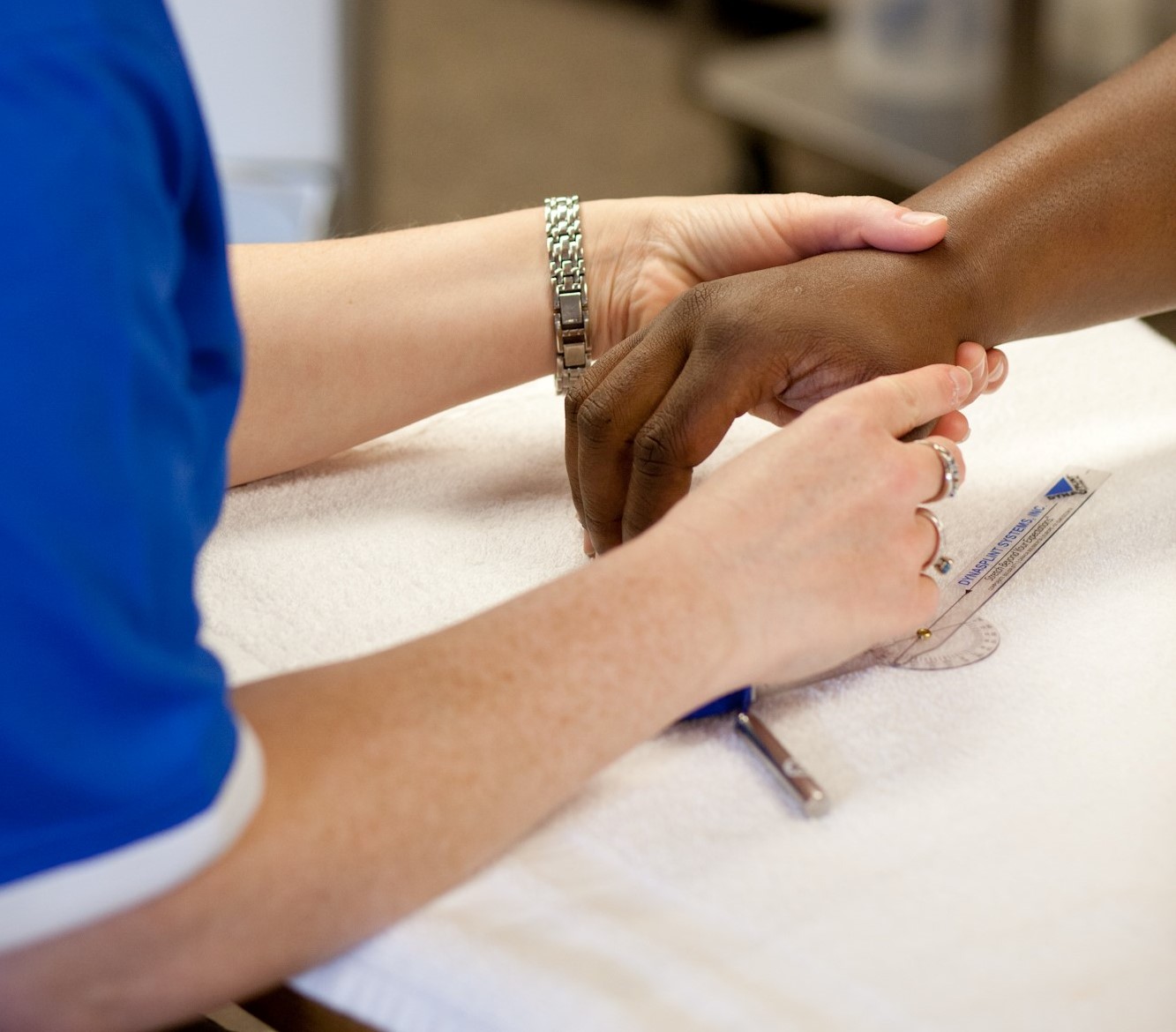
Hand therapy is highly beneficial for individuals with conditions affecting the hands and upper extremity. Along with your hand surgeon, it is important to work with a qualified hand therapist who can evaluate and treat problems related to the upper extremity. A certified hand therapist (CHT) is an occupational therapist or physical therapist who has practiced for at least 3 years and has successfully passed a comprehensive test of advanced clinical skill and theory in the upper extremity.
For those who suffer from Dupuytren’s Disease, a CHT is important to the post-injection/surgery process. If a patient receives an injection or requires surgery, the surgeon will typically refer the patient to a hand therapist for custom fabrication of a night splint to maintain the involved fingers in a position of relaxed, but maximum extension. This will aid in prevention of the fingers turning to the flexed/bent posture, as well as promote healing and improved circulation.
If hand surgery (i.e., fasciotomy) is performed and diseased tissue is removed, a hand therapist plays a more involved role in the recovery process. The therapist will develop an exercise program specific to the needs of the individual. It is imperative that movement and exercises are performed following the surgery, but in the correct manner. If the patient is overzealous with exercises or activities, the hand can become very swollen, which leads to greater stiffness and the development of undesired scar tissue. The hand therapist will guide the patient as to the appropriate techniques for performance of the finger/hand exercises. As well, the patient will be taught how to decrease and minimize swelling, including use of compression garments, elevation, tissue massage and ice. Once the sutures are removed, it is very important to begin scar management.
It is vital to the recovery to minimize scar thickness and adhesions. The therapist will teach the patient how to appropriately mobilize/massage the scar and the tissue surrounding the scar. As well, there are several topical treatments, including the use of silicone gel sheets that will likely be recommended to help prevent the scar from being elevated and thick. At times, the small nerves to the fingers can become irritated due to the surgery. The therapist will teach the patient desensitization techniques to help decrease the discomfort.
Successful recovery from Dupuytren’s surgery is a partnership between the surgeon, the patient and the therapist. The hand therapist will provide ongoing education and guidance to the patient to help promote optimal recovery. Hand therapy is typically indicated once weekly for 6-8 weeks following the fasciotomy. One of the primary goals of the hand therapist is to teach the patient to self-treat through performance of their home management program. As well, the therapist may perform moist heat treatments, ultrasound, tissue mobilization techniques and passive range of motion exercises.
Once formal hand therapy is discontinued, the patient will continue with performance of the home management program and wear of the night splint for several weeks to months. Outcomes after Dupuytren’s procedures that are accompanied by the performance of hand therapy are typically outstanding and allow the patient to return to excellent mobility and function.
